
Dermatology Marketing & Medical SEO Services: Quick Overview
Dermatologist SEO has become the backbone of modern dermatology marketing in 2026. As patient behavior continues shifting toward digital discovery, practices that master search engine optimization consistently outperform competitors relying solely on referrals or paid advertising.
Dermatology marketing encompasses a strategic mix of SEO, local SEO, paid ads, social media, and reputation management specifically tailored for skin, hair, nail, and cosmetic practices. Unlike generic SEO tactics applied to other industries, medical practices require specialized approaches that account for HIPAA compliance, medical accuracy, and the unique patient journey in healthcare.
Dermatologist SEO focuses on optimizing a practice’s website and online profiles to rank for terms patients actually search, such as “dermatologist near me,” “acne treatment in Dallas,” or “skin cancer screening 2026 guidelines.” This search engine optimization work includes keyword research, on-page content optimization, technical site improvements, and building authoritative signals like patient reviews and healthcare backlinks.
Why does SEO matter so much? The economics are compelling. SEO delivers the lowest long-term cost per patient acquisition, ranging from $25-40 per new patient after 3-6 months of investment. Compare that with $75-200 per patient through PPC and paid social advertising. Those savings compound significantly over time.
Core results SEO delivers for dermatology practices:
- More appointment requests from patients actively searching for dermatology services
- Sustainable patient acquisition that continues even when ad budgets pause
- More qualified leads who arrive with clear intent to book
- Higher online visibility for both medical dermatology and cosmetic treatments
- Reduced staff burden through educational content that answers common questions
The rest of this article walks dermatology practices through a practical SEO and comprehensive marketing strategy roadmap designed for 2026 and beyond.
Want results like these for your practice? Our dermatology SEO specialists are ready to build your patient acquisition engine. Get a Free Dermatology SEO Consultation →
How Patients Now Find Dermatologists Online
Cosmetic dermatology services now represent a significant and growing revenue segment. Treatments like Botox, fillers, laser resurfacing, chemical peels, microneedling, and body contouring account for an increasing share of practice income in 2024-2026.
Patient behavior has fundamentally shifted over the past several years. Over 70% of dermatology patients now begin their healthcare journey on Google with searches such as “mole check near me,” “virtual dermatologist 2026,” or “eczema specialist in Boston.” Mobile devices drive the majority of these searches, with Google reporting year-on-year growth in “same day dermatologist” and “online skin consultation” queries.
Before scheduling an appointment, patients research multiple digital touchpoints. They check Google search results and Google Maps listings, browse healthcare profile sites like Healthgrades and Zocdoc, evaluate the practice website, scroll through Instagram for before-and-after photos, and read online reviews. This omnichannel discovery pattern means practices must maintain a strong online presence across all these channels to effectively capture patients who are actively searching for care.
This digital-first behavior makes marketing and SEO central to how often and where your practice appears throughout the patient journey.

What Is Dermatologist SEO and Why It’s Critical for Dermatology Marketing
Dermatologist SEO represents a bundled strategy encompassing keyword research, on-page optimization, technical SEO, content creation, and off-site signals like patient reviews and backlinks. Unlike general business SEO, medical SEO must be medically accurate, compliant with healthcare regulations, and aligned with how dermatology patients actually search.
Keyword examples demonstrate different search intent tiers:
- Informational: “what is basal cell carcinoma,” “how to treat eczema at home”
- Transactional: “acne scar treatment near me,” “Botox appointment Seattle”
- Branded: “[Practice Name] dermatologist reviews”
SEO integrates with larger dermatology marketing efforts in several ways. Strong organic rankings improve Google Ads Quality Scores, which reduces per-click costs on PPC campaigns. SEO content drives social media repurposing opportunities, and organic website traffic multiplies returns from any offline campaigns like local magazine advertisements pointing patients to your website.
SEO matters uniquely in dermatology for several reasons. First, results are highly visual, making before-and-after content particularly powerful. Second, patient lifetime value is exceptionally high. A teenager acquired for acne treatment in 2026 may return in 2027-2029 for cosmetic treatments like laser resurfacing or injectables. Third, competition has intensified significantly, with practices competing against local clinics, national skincare brands, telehealth platforms, and med spas.
All SEO efforts must remain HIPAA-aware. This means no publishing of identifiable protected health information, careful management of review responses without disclosing specific diagnoses, and signed consent forms for any before-and-after photography.
SEO is crucial for dermatology practices as it enhances online visibility, allowing potential patients to find services more easily, which leads to increased appointment bookings.
The Growing Importance of Local SEO Strategies for Dermatologists
Local SEO serves as the engine behind “dermatologist near me” searches and Google Maps visibility within your practice’s actual catchment area. For most dermatologists, 80-90% of revenue comes from patients within a 30-45 minute drive of the clinic, making local SEO paramount.
The majority of “dermatologist near me” searches happen on mobile devices. Google reports consistent year-on-year growth for queries like “same day dermatologist” and “online skin consultation” between 2023-2026, indicating patients increasingly expect immediate or virtual access to care.
The Google Local Pack, showing the top 3 map results for location-based searches, represents the highest-value real estate in local search results. Appearing in this pack approximately doubles or triples call click-through rates and direction requests compared to positions 4-10 in organic results.
Core local SEO levers for dermatology clinics:
- Google Business Profile optimization with accurate categories, hours, photos, and videos
- NAP (Name, Address, Phone) consistency across all online properties
- Local healthcare directory listings on Healthgrades, Zocdoc, and similar platforms
- Active patient review generation and professional response protocols
- Location specific landing pages optimized for each physical clinic
Consider the impact: a 2-location practice in Phoenix implementing structured local SEO efforts saw new-patient calls increase by 40% after 9 months of consistent work. Local SEO helps practices dominate the geographic areas where they actually serve patients.
Key Advantages of Dermatology Marketing Focused on SEO
SEO-centric dermatology marketing builds a sustainable pipeline of new and returning patients rather than creating dependence on continuous ad spending.
Key advantages in plain language:
- Lower cost per acquisition that improves over time as content and authority compound
- Compounding organic traffic that continues generating leads at zero marginal cost
- Higher trust signals, as patients often perceive organic search engine results pages rankings as more credible than advertisements
- Ongoing visibility that persists even when advertising budgets pause
- Content assets that work 24/7 answering patient inquiries and pre-qualifying leads
A concrete example: a mid-size dermatology practice investing $6,000 per month in SEO content and technical optimization for 12 months can realistically add 80-150 new organic patients per month, depending on market size and competitiveness. This translates to a cost per patient ranging from $40-75, substantially lower than PPC channels.
Benefits differ for medical versus cosmetic services. SEO fills medical appointment slots for rashes, biopsies, and chronic condition management while simultaneously driving high-value elective bookings for fillers, lasers, and body contouring procedures. The same patient often converts from medical to cosmetic services over time, multiplying lifetime value.
SEO content also reduces staff burden by answering common questions online. Pre-op instructions, downtime expectations after chemical peels, and insurance coverage questions can all be addressed through well-crafted website content, improving patient satisfaction before they even walk through your doors.
Let us build the content strategy that works for your practice around the clock. Get a Free Dermatology SEO Consultation →
Core Dermatologist SEO Strategy: 10 Foundational Steps
This section provides a practical checklist of foundational SEO actions every dermatology practice should implement in 2026. Each step uses dermatology-specific examples rather than generic business keywords.
The 10 foundational steps:
- Technical audit to identify and fix critical website errors
- Mobile optimization for smartphone-first patient searches
- Keyword strategy targeting condition and treatment searches
- Content hubs organizing information by topic clusters
- Local SEO optimization for geographic visibility
- Review generation and reputation management systems
- Internal linking creating logical site architecture
- Schema markup helping search engines comprehend your practice
- Backlink building from local and healthcare sources
- Ongoing analytics tracking and strategy refinement
Each step requires attention to HIPAA and medical advertising rules wherever they affect implementation, particularly regarding review responses, before-and-after galleries, and patient testimonials.
Technical SEO for Dermatologists: Site Speed, Security, Structure, and Website Optimization
Technical SEO underpins everything in your search strategy. If the site loads slowly or lacks proper security, both search engine rankings and patient trust suffer. Website optimization at the technical level creates the foundation for all other SEO work.
Mobile-first design is non-negotiable, as over 60-70% of dermatology-related searches in 2024-2026 occur on smartphones. Many searches are motivated by urgent situations where patients notice concerning skin changes and need quick answers.
This section covers audits, hosting and site speed, crawl issues, HTTPS security, URL structure, sitemaps, and media optimization. Coordinate with a web developer experienced in medical websites to avoid breaking online booking forms or patient portals during technical changes.
All reporting is HIPAA-compliant.
Run a Full Technical Audit and Fix Critical Errors
Every dermatology website should be crawled with tools like Screaming Frog or Sitebulb at least twice per year to catch issues before they impact rankings.
Common problems to identify:
- Broken links on treatment pages that frustrate users and search engines
- Duplicate title tags across similar service pages
- Missing meta descriptions for core dermatology services
- Redirect chains from older practice rebrands
Prioritize pages that drive revenue: “/acne-treatment,” “/skin-cancer-screening,” and location pages like “/dermatologist-dallas-tx.” Create a simple spreadsheet tracking each issue and its resolution, focusing first on 404 errors, 500 errors, and pages loading in more than 3 seconds.
Fixing technical errors typically results in faster indexing and noticeable ranking improvements within 4-8 weeks of implementation.
Improve Hosting, Core Web Vitals, and Mobile Experience
Upgrade from cheap shared hosting to a reputable provider optimized for healthcare or high-traffic WordPress sites if you haven’t already. Quality hosting supports faster load times and better uptime.
Google’s Core Web Vitals, including Largest Contentful Paint (LCP), Interaction to Next Paint (INP), and Cumulative Layout Shift (CLS), matter significantly for dermatology pages with heavy image content like before-and-after galleries and procedure photos.
Specific improvements to implement:
- Image compression without visible quality loss
- Browser caching for returning visitors
- Removing unused plugins or scripts
- Limiting pop-ups that interfere with mobile users booking appointments
Aim for under 2.5 seconds LCP on key service and location pages. Use Google PageSpeed Insights and Search Console Core Web Vitals reports to benchmark improvements quarterly.
Fix Crawl Errors, Redirects, and Canonical Issues
Clean indexation means Google sees one canonical URL per page for each dermatology service and location. Typical issues include duplicate content for similar treatments like “chemical peel” versus “TCA peel” pages, and old URLs from redesigns that were never properly redirected.
Implement 301 redirects from legacy URLs to the most relevant current treatment page to preserve link equity. Set canonical tags where similar content must exist, such as seasonal versions of sunscreen guides.
A well-managed crawl and canonical strategy improves crawl budget efficiency, which particularly helps larger multi-location dermatology groups with 200+ pages.
Secure the Site with HTTPS and Patient-Safe Forms
Every dermatology website in 2026 must use a valid SSL certificate sitewide. Chrome labels non-HTTPS sites as “Not Secure,” which deters potential patients from submitting appointment request forms containing personal information.
Redirect all HTTP URLs to HTTPS and renew certificates before expiration dates. Use HIPAA-capable form providers and add clear privacy notices on contact forms.
Google uses HTTPS as a ranking signal, and secure sites tend to have higher engagement metrics as patients feel more comfortable sharing information.
Use Short, Descriptive URLs and Topic-Based XML Sitemaps
Adopt clean, keyword-focused URLs like “/acne-treatment,” “/skin-cancer-screening,” or “/psoriasis-treatment-boston” instead of generic IDs or query strings. URLs should mirror how patients search, using terms such as “laser-hair-removal-chicago.”
Split XML sitemaps into logical groups: services, locations, and blog content. Topic-based sitemaps help Google discover important new pages faster, especially when launching new offerings. Submit updated sitemaps in Google Search Console after significant content updates or new clinic openings.
Compress Images and Optimize Media-Heavy Content
Dermatology sites are inherently image-heavy with before-and-after galleries, dermatoscopic images, and procedure room photos. Uncompressed images significantly slow performance.
Use modern formats like WebP and compression tools to reduce file sizes without visible quality degradation. Implement lazy loading for images below the fold so content loads progressively as users scroll.
Remember HIPAA compliance for before-and-after photos, ensuring signed releases and de-identification where necessary. Optimized images improve Core Web Vitals, user experience, and conversion rates on galleries of high quality photos.
On-Page SEO and Content Strategy for Dermatology Practices
What you say on your website, and how you say it, determines whether Google and dermatology patients consider your practice an authority. All medical content should be medically reviewed and contain up to date information aligned with current guidelines.
This section covers patient personas, keyword mapping, content hubs, dedicated treatment pages, and on-page elements. Balance SEO requirements with readability through short paragraphs, clear subheadings, FAQs, and visuals.
Define Ideal Patient Personas and Search Intent
Understanding who searches for your services shapes effective content. Common dermatology personas include:
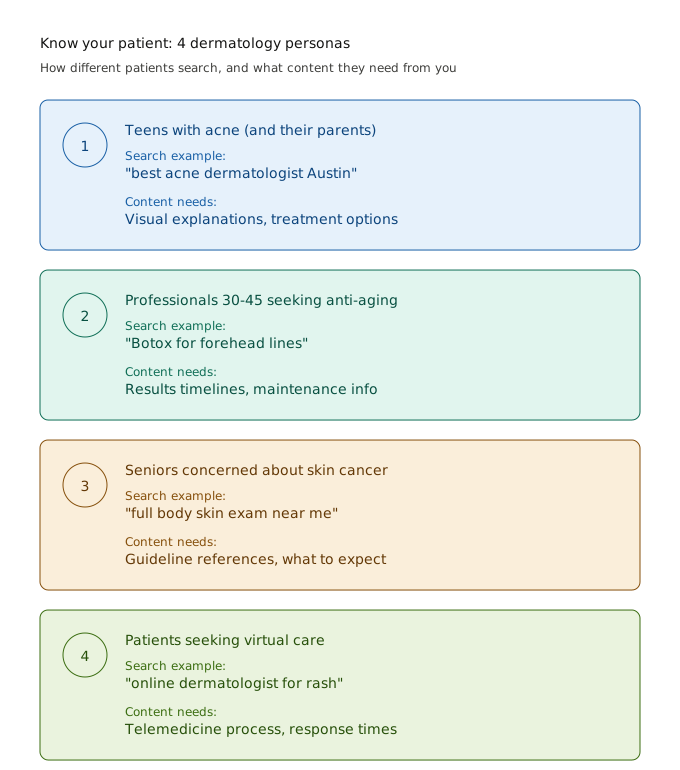
Map content to each stage of the patient journey: awareness through educational blogs, consideration through service pages and FAQs, and decision through patient testimonials, pricing information, and financing options.
Build a Topical Map and Dermatology Content Hubs
A topical map structures interconnected pages covering all subtopics around core themes. This approach signals authority so that search engines understand your depth of expertise.
An “Acne Hub” example includes:
- Main hub page covering acne overview
- Subpage: causes of acne
- Subpage: teenage acne treatment
- Subpage: adult acne management
- Subpage: acne scarring treatment
- Subpage: isotretinoin therapy
- Subpage: skincare routines for acne-prone skin
Build similar hubs for “Skin Cancer & Mole Checks” covering ABCDE warning signs and biopsy processes, and “Anti-Aging & Cosmetic Dermatology” covering Botox, fillers, microneedling, and laser treatments.
Internal linking within each hub and back to the main hub page signals topical authority. Publish new or refreshed hub content at least quarterly to maintain relevance.
Create Dedicated Pages for Each Treatment and Condition
Every high-value service deserves its own SEO-optimized page. This includes acne treatment, rosacea management, psoriasis therapy, mole checks, skin cancer surgery, Botox, fillers, laser hair removal, and chemical peels.
Ideal treatment page structure:
- Clear H1 with primary keyword
- Overview addressing patient pain points
- Benefits specific to that treatment
- Who the treatment is appropriate for
- Procedure steps explained clearly
- Preparation and recovery information
- Risks presented in balanced, accurate language
- FAQ section addressing common questions
- Before-and-after photos with consent
- Strong call-to-action for booking
Include local modifiers naturally: “Acne treatment in Denver since 2012” or “Board-certified dermatologist in Miami for skin cancer checks.” Separate pages let you target specific long-tail relevant keywords like “seborrheic dermatitis scalp treatment Boston.”
Optimize Titles, Meta Descriptions, Headings, and On-Page Copy
Page titles and meta descriptions serve as your first impression in search results and must speak directly to search intent.
Title patterns that work:
- “[Primary Service] Dermatologist in [City] | [Practice Name]”
- “Acne Treatment Dermatologist in Seattle | ClearSkin Clinic”
Meta description pattern emphasizing outcomes:
“Board-certified dermatologists in Chicago treating acne, rosacea, eczema, and more. Same-week appointments available. Call or book online today.”
Use H2 and H3 headings to break up content, each aligned with questions patients ask: “How long does Botox last?” or “What happens during a skin cancer screening?” Include relevant keywords naturally in the first 100-150 words and in at least one subheading.
Add Structured Data (Schema) for Practice, Services, FAQs, and Patient Reviews
Schema markup helps search engines understand that your business is a dermatology practice offering specific medical services in a specific location.
Recommended schema types:
- LocalBusiness or MedicalBusiness for the practice
- Physician for individual provider pages
- Service for specific treatments
- FAQ page for FAQ content enabling rich results
- Review for ratings display
Marking up FAQ sections allows Google to show question-answer rich results, increasing click-through rates. Use Google’s Rich Results Test to validate implementation.
Structured data is a key part of on-page SEO because it communicates extra details about a page directly to search engines, improving visibility in enriched search features like knowledge panels and rich snippets.
Use Internal Linking in a Root → Category → Treatment Hierarchy
Structure internal links logically: homepage links to category pages like “Medical Dermatology” and “Cosmetic Dermatology,” which link to specific treatment pages like “psoriasis treatment” or “lip filler.”
Location pages should link to services commonly searched in that city and vice versa. Include related-articles blocks on blog posts to encourage deeper engagement.
Use descriptive anchor text like “acne scar treatment options” rather than generic “click here.” Thoughtful internal linking spreads authority and helps both users and search engines discover informative and engaging content.
Refresh, Update, and Prune Old Dermatology Content
Dermatology information evolves as new treatments emerge and guidelines update. Content from 2018-2024 often needs refreshing by 2026.
Quarterly content audit process:
- Identify top-performing posts to refresh with new data
- Find underperforming posts to consolidate or remove
- Add 2023-2026 references and updated FAQ sections
- Include new clinical photos with proper consent
- Redirect thin, outdated pages receiving no traffic
Refreshed content typically sees improved search rankings and traffic within 30-90 days.
Local SEO & Online Reputation: Winning Nearby Dermatology Patients
For most dermatologists, 80-90% of revenue comes from nearby patients within 30-45 minutes of the clinic. This geographic reality makes effective local SEO strategies paramount for sustainable growth.
Google emphasizes proximity, relevance, and prominence for local rankings in 2024-2026. Patient reviews and star ratings carry particular weight in dermatology because patients trust practitioners with visible, emotionally significant concerns like facial appearance, hair, and scarring.
Multi-location dermatology groups must manage local SEO performance separately for each clinic while maintaining brand consistency across all locations.
Set Up, Verify, and Optimize Your Google Business Profile (GBP)
Every physical dermatology location needs its own Google Business Profile, verified with accurate name, address, phone, categories, and hours. This profile directly impacts your visibility in local searches and Google Maps results.
Primary category examples: “Dermatologist,” “Skin Care Clinic,” or “Medical Spa” depending on actual services and local regulations.
Profile optimization essentials:
- Add real clinic photos of reception, treatment rooms, and providers
- Update photos at least quarterly to appear current
- Write a business description highlighting specialties
- Post updates regularly about new services, seasonal skin tips, and events
Regular posting signals activity to Google and keeps your profile fresh for potential patients browsing your clinic details.
Keep NAP Consistent and Build Citations in Medical Directories
Consistent Name, Address, Phone across your website footer, GBP, Healthgrades, Zocdoc, WebMD, Vitals, and local directories is foundational. Inconsistent NAP creates confusion for search engines and patients alike.
Conduct annual NAP audits to catch discrepancies from moves, rebrands, or additional locations. List the practice on major general directories and niche healthcare platforms, ensuring contact details match everywhere.
Citations with matching NAP and correct categories help Google confirm legitimacy and improve local rankings. Avoid using tracking phone numbers in external citations without proper canonical handling.
Reputation Management: Collect, Respond to, and Showcase Online Reviews
Online reviews serve as both a ranking factor and powerful social proof for attracting patients. They’re especially important for elective aesthetic procedures where patients research extensively before committing.
Review generation process:
- Send post-visit emails or SMS 24-48 hours after appointments
- Per Google’s announcement April 17, 2026, avoid requesting reviews while patients are still on-site, as this can trigger Google’s review fraud detection and result in removal
- Asking for specific content or the names of staff to be included in reviews is prohibited by Google
- Review gating is prohibited by Google
- Target multiple platforms: Google, Healthgrades, Zocdoc
Respond professionally to all reviews without sharing protected health information. A steady stream of new 4-5 star reviews can move a practice from invisible to top choice in local packs. Reputation management and online reputation directly impact patient acquisition.
Create Location-Specific Landing Pages for Each Clinic
Build detailed location pages for each physical location, optimized for city or neighborhood rather than generic geography. “Dermatologist in Brooklyn Heights” outperforms “Dermatologist in New York.”
Key elements for location pages:
- Embedded map showing exact location
- Parking and transportation directions
- Nearby landmarks for orientation
- Local patient testimonials with consent
- Services available at that specific location
Include neighborhood-specific content addressing local skin concerns. Sun damage concerns in Phoenix differ from humidity-related issues in Miami. Link location pages from main navigation and corresponding GBP profiles to maximize local SEO efforts.
Earn Local and Medical Backlinks to Improve Search Engine Rankings
Backlinks from reputable local organizations and medical sites act as votes of confidence resulting in higher search engine rankings.
Quality link sources for dermatology:
- Local hospitals and cancer centers
- Primary care networks
- Local news outlets covering health topics
- University dermatology departments
- Medical associations
Effective tactics include co-authoring skin health articles with local media, sponsoring community events like free skin cancer screenings during Skin Cancer Awareness Month in May, and publishing press releases for major practice milestones.
Avoid spammy link schemes or generic packages that could trigger penalties. Even a modest number of high-quality local backlinks significantly impacts Map Pack and organic rankings.
Not sure where your local SEO stands? We’ll show you exactly where your practice is losing visibility. Get a Free Dermatology SEO Consultation →
Integrating SEO with Broader Dermatology Marketing Channels
Dermatologist SEO performs best when aligned with PPC ads, social media, email nurturing, and offline branding as part of a comprehensive marketing strategy. This integration improves attribution and maximizes marketing investment returns.
Dermatology is highly visual and seasonal. Acne flares at school start, sun damage concerns peak in summer, and cosmetic bookings increase before holidays. Cross-channel campaigns leverage these patterns effectively.
Position SEO as the long-term foundation of digital marketing, with PPC and social providing immediate demand capture and brand building.
Pair Dermatologist SEO with High-Intent PPC Campaigns
PPC allows dermatologists to immediately appear for competitive terms while SEO optimization work is still ramping up. High-intent keywords worth bidding on include “same day dermatologist,” “skin cancer screening appointment,” “Botox specials near me 2026,” and “acne clinic for teens.”
SEO and PPC data feed each other productively. Keywords converting in ads inform SEO content priorities. High-performing SEO pages make strong PPC landing pages with better Quality Scores.
Budget based on practice size: $2,000-$10,000 monthly for PPC layered on organic efforts for mid-size dermatology clinics. Track cost per lead and cost per patient from PPC versus organic to optimize channel mix through healthcare marketing analytics.
Use Social Media to Amplify SEO Content
Instagram, TikTok, and YouTube excel for dermatology given visual transformations and educational content opportunities. Repurpose SEO blog posts into short videos or carousels linking back to full articles.
While social signals aren’t direct ranking factors, social exposure drives branded searches and link opportunities that indirectly support SEO. Patient interactions on social platforms build familiarity that converts to appointments.
Obtain written consent for identifiable patient images and maintain a consistent posting cadence mixing education, FAQs, behind-the-scenes content, and service promotion anchored by SEO pages.
Leverage Email Marketing and CRM to Support SEO-Driven Leads
SEO brings new visitors while email workflows keep them engaged and returning for follow-up treatments. Build nurture sequences triggered by forms on SEO pages.
For example, someone downloading a “2026 Skin Cancer Self-Check Guide” receives a series of educational emails and screening reminders. Segment lists by condition or interest to send highly tailored content.
Email marketing costs $2-5 per patient touch and strongly supports lifetime value when combined with SEO. Use HIPAA-compliant email tools and obtain clear consent for marketing communications.
Measuring Dermatology SEO Success and Continuous Improvement
What gets measured gets improved. Dermatology marketing must be data-driven to optimize SEO services effectiveness and justify ongoing investment.
Core KPIs to track:
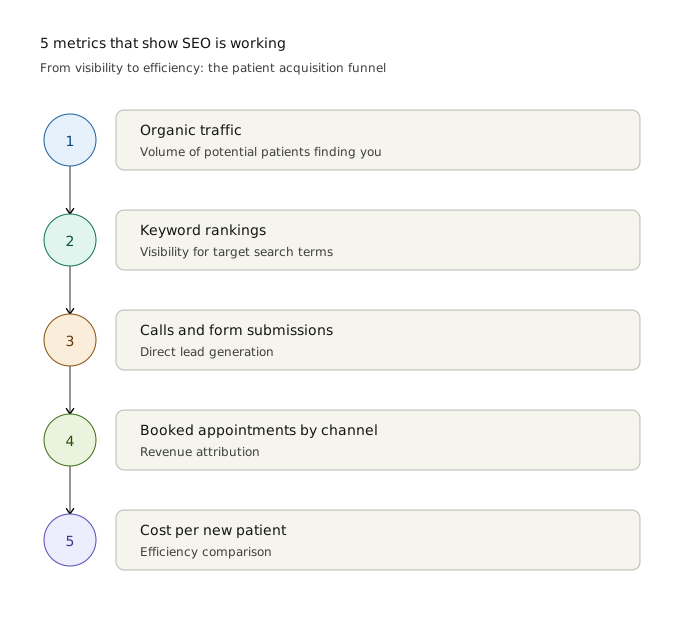
Use Google Analytics 4, Google Search Console, call tracking numbers, and CRM dashboards. Monthly reporting and quarterly strategy reviews allow adjustment of content, technical priorities, and budget allocation.
Track Search Rankings, Traffic, and Conversions from Organic Search
Track 50-150 core keywords per location, including “dermatologist near me,” specific conditions, and high-value cosmetic terms. Analyze Search Console data for impressions, clicks, CTR, and average position trends.
Set up conversion tracking in GA4 for phone clicks, contact forms, online booking completions, and virtual visit sign-ups. Focus on leads and booked appointments rather than vanity metrics like raw traffic alone.
Review keyword rankings and conversion trends monthly to spot patient acquisition opportunities and problems early.
Test CTAs, Layouts, and Appointment Widgets
Small changes significantly impact conversions. CTA wording like “Book Your Skin Check” versus “Request an Appointment,” button colors, and placement all affect results.
A/B test different combinations on high-traffic pages. Use frictionless, mobile-friendly appointment widgets integrating with your scheduling system. Test “Call Now,” “Book Online,” and “Text Us” options based on patient demographics.
Consistent UX improvements raise conversion rates even with flat traffic, improving revenue per visitor.
Refine Strategy Based on Data and When to Bring in Specialists
Review quarterly data to decide where to focus: more local content, new service pages, faster site performance, or stronger review campaigns. As algorithms and patient behavior evolve, SEO strategies must adapt.
Small practices may handle basic SEO in-house. Multi-location or highly competitive markets often benefit from specialized dermatology SEO plans and SEO services from agencies with healthcare experience.
Look for partners offering transparent reporting, HIPAA awareness, and case studies with clear patient growth metrics. SEO is a 6-12 month investment horizon evaluated over that timeframe, not week to week.
FAQ: Practical Questions About Dermatology Marketing & SEO in 2026
How long until we see results from SEO?
Expect meaningful ranking and traffic improvements within 3-6 months for less competitive terms and local searches. Highly competitive keywords for cosmetic procedures may take 6-12 months to show significant movement. Technical fixes often show faster results, sometimes within 4-8 weeks.
How much should we budget monthly for dermatology SEO?
Typical investments range from $5,000-15,000 monthly depending on practice size, number of locations, and market competitiveness. Single-location practices in smaller markets may start lower, while multi-location groups in competitive metros require more substantial investment for SEO plans.
Are relevant keywords different for cosmetic versus medical dermatology?
Yes, in important ways. Cosmetic procedure keywords often have higher competition and require more visual content such as before-and-after galleries. Medical dermatology content benefits from clinical accuracy and guideline references. Both require HIPAA compliance, but cosmetic content must also navigate FTC guidelines for testimonials and outcome claims.
How do we stay HIPAA-compliant with SEO content?
Never publish identifiable patient information without explicit written authorization. Use signed consent forms for before-and-after photos. When responding to reviews, avoid acknowledging specific patient relationships or diagnoses. Use HIPAA-compliant form providers for appointment requests.
Do we need separate websites for med spa versus medical practice?
Not necessarily, but clear navigation distinguishing cosmetic procedures from medical services helps both users and search engines. Some practices maintain separate brands with distinct websites when regulatory requirements or patient expectations differ significantly between service lines.
How important are reviews compared to other ranking factors?
Reviews significantly impact local rankings and patient conversion. A practice with 200 recent positive reviews will typically outrank competitors with 20 reviews in local packs. Beyond rankings, reviews serve as powerful social proof that influences booking decisions.
How do SEO strategies benefit dermatologists?
Effective SEO strategies for dermatologists can lead to long-term growth by generating qualified leads and improving patient engagement through optimized online content.
Do dermatology websites need regular updating?
Regularly updating a dermatology website ensures information remains accurate and relevant for patients, which signals to search engines that the site is active and supports higher rankings.
Conclusion: Building a Future-Proof Dermatology Marketing Engine
Dermatologist SEO forms the foundation of sustainable dermatology marketing in 2026 and beyond. Practices that invest in organic search today build a patient acquisition engine that compounds returns for years rather than disappearing when advertising budgets pause.
Success requires integrating local SEO for nearby patients, on-page content establishing authority, technical health ensuring performance, and coordinated campaigns across PPC and social channels. Practices treating marketing as a long-term system rather than occasional advertising consistently see lower acquisition costs and stronger patient loyalty.
First actions for the next 30 days:
- Audit your website for technical errors and site speed issues
- Claim and fully optimize your Google Business Profile
- Build or improve your top 10 service pages targeting high-value treatments
- Implement a consistent review generation process
The dermatology landscape continues evolving with tele-dermatology growth, AI-driven diagnostics, and shifting patient expectations through 2026. A strong digital presence and robust SEO foundation prepares your practice to adapt and thrive regardless of how discovery behavior changes.
Start this week by updating your most-visited service page and Google Business Profile, beginning the compound growth that SEO delivers.
Your future patients are already searching. Is your practice showing up?